
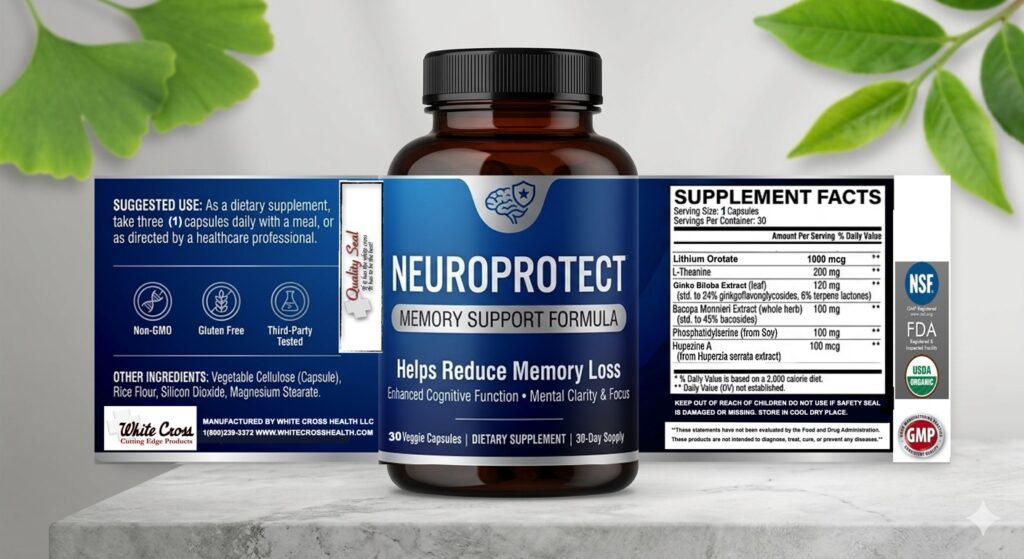
Recent research, including a notable study from Harvard Medical School and Nature, suggests that lithium may be a “micronutrient” essential for brain health. In these studies, lithium was found to be significantly depleted in the brains of those with mild cognitive impairment (MCI) and Alzheimer’s, and replenishing it at low doses reversed memory loss.
Key Evidence and Findings
- Stabilization of Impairment: Research, including studies in Brazil, suggests that low-dose lithium may help stabilize cognitive decline in patients with Alzheimer’s over a 15-month period.
- Dementia Prevention: Meta-analyses of multiple trials suggest that lithium can improve cognition and may be more effective than some FDA-approved drugs in certain contexts.
- Neuroprotective Mechanisms: Lithium appears to work by inhibiting the enzyme GSK-3β (which is linked to amyloid plaque and tau protein buildup) and increasing brain-derived neurotrophic factor (BDNF), which supports neuron growth.
WHY LITHIUM OROTATE VS LITHIUM CARBONATE.
Recent research suggests lithium orotate is preferred over lithium carbonate for cognitive decline due to its superior ability to cross the blood-brain barrier, avoid sequestration by amyloid plaques, and act at lower, less toxic doses to reverse memory loss in preclinical studies. It acts as a neuroprotective agent by decreasing tau protein phosphorylation and restoring synapses. [1, 2, 3, 4, 5]
Why Lithium Orotate is Considered Superior for Cognitive Issues:
Avoids Amyloid Sequestration: Lithium carbonate, used for bipolar disorder, is highly attracted to negatively charged amyloid plaques, which can make it less effective for Alzheimer’s disease (AD). In contrast, lithium orotate does not bind as strongly to these plaques, allowing it to remain active in the brain and provide protective effects.
Greater Brain Penetration: Studies from the 1970s and newer research suggest lithium orotate crosses the blood-brain barrier more effectively than other lithium salts, delivering more lithium directly to brain cells.